
In this article, we will explore the world of digital advertising, covering its fundamental aspects and shedding light on its importance, benefits, and implementation strategies. Whether new to the concept or seeking to enhance your understanding, this guide will provide valuable insights into digital advertising.
Let's Get Going
With all the materials accessible online, learning about digital advertising has never been more straightforward than it is right now. Where to begin is one of the significant obstacles that novices face. As you would expect, digital advertising encompasses various disciplines, methods, and formats. Before reading about advanced Performance marketing topics like Conversion Rate Optimization (CRO), Inbound Marketing, and programmatic, you need to acquaint yourself with the fundamentals of Digital Advertising. Understanding the distinction between impressions and reach, how digital advertising may assist you, and how to create a digital advertising plan will provide you with the information to continue your Digital Advertising education. As previously said, you should begin with the fundamentals, including defining digital advertising.
What Exactly is Digital Marketing?
Webster’s Dictionary defines advertising as “the activity of bringing something to the public’s notice, often via paid announcements.” Advertising involves paying to send a specific message to your users or customers. Adding Digital signifies the incorporation of many digital channels into a process.
6 Different Forms Of Digital Advertising
- Search
- Display
- Video
- Native
- Social Media
Search
Search advertising, commonly referred to as Paid Search, is a kind of advertising in which marketers utilize search engines to show advertisements to users while those users are actively looking for a solution to a problem that they are having. Since it is focused on the user’s specific requirements, search advertising has proven to be one of the most successful forms of advertising.
Display
Display advertising is online advertising that uses graphic advertisements and delivers them to visitors through a variety of websites. It is ideal for contacting many people, ultimately increasing company exposure.
Video
Display advertising is a good analogy for video advertising, with the critical difference being that video advertising replaces visuals with moving pictures in the advertisements.
Native
When using native advertising, marketers will utilize sponsored content that appears to the user as if it were organic material. A sponsored news story is the kind of native advertising that seems to the typical user to be the simplest and most basic example. It will have the same appearance and texture as any other article. Despite this, the content will attempt to influence their behavior like any other advertisement would.
Social Media
Some may see advertising on social media as a hybrid of display, video, and native advertising. The provision of advertisements via various Social Media platforms is the primary function. Most of the time, these advertisements are difficult to differentiate from the original content consumers view on such platforms.
The kind of marketing known as email advertising is the practice of sending promotional messages to customers using their email addresses. Because of this, marketers often know who will see and read their news, making it a perfect medium for personalization since it enables advertisers to target specific audiences. In light of the above, it also indicates that marketers should inquire about their target audience’s explicit authorization before receiving promotional emails from that audience. These are the most often used sorts of digital advertising; nevertheless, many more varieties of digital advertising, depending on how distinguishing elements are defined. Check out our blog regularly since we could even write about those other things in the future, so keep an eye on it.
Digital advertising often answers the question, “why must I advertise on digital platforms.”
There are various benefits associated with digital advertising; let’s examine how digital advertising might be of use to you.
Advantages of Implementing Digital Advertising
Targeting and Customization with Great Accuracy
When you advertise via digital platforms, you have more possibilities, each of which is more exact. The age group you’d like to target, the audience’s interests, offline and online behavior, and many other details may all be specified. Due to the incredible precision of the targeting, there is also enough possibility for customization. This level of accuracy and customization means you can build your message for a specific audience and then display your advertisements only to that audience. On the other hand, certain adjustments have been made to the privacy and cookie rules to improve user privacy, which will restrict the targeting possibilities available. However, more information on this topic will be provided in upcoming blog articles so that you can stay tuned.
Simple to Monitor and Tweak
Let’s say you decide to invest in conventional media ads (print, radio, and television), and your business experiences an increase in sales as a direct result. However, could you tell me why and how exactly are questions that need answering? Could you help pinpoint the exact advertisement or media outlet that caused the drop? We just wanted to let you know that you have yet to determine who will see your advertisement or what they will do with it. Access to this data is a considerable advantage when optimizing a digital advertising campaign since it allows for far more targeted optimization. Changes in privacy and cookie regulations, including those affecting targeting choices, will reduce the amount of information accessible to marketers. Despite this, we’ll need to find a method to adapt. It will be interesting to see how people adapt to these new circumstances.
It's Cost-Effective and Scalable
The concept of digital advertising is intriguing, but it must come at a high cost, right? Not really; you can get started with minimal expenditure, far less than what you would need for practically any other kind of advertising channel. What’s great is that you can quickly scale up your advertising if you want to. Because your advertising efforts provide real-time statistics, you can determine which aspects of your campaigns are more successful and gradually direct more of your spending into those areas.
There you will find the Majority of your Consumers
Those days, when it was sufficient to promote by print media, radio, or television, are long gone. Simply glancing at how much money will be spent on advertising in different countries in 2021 will make this abundantly clear. Marketers are shifting their focus to digital advertising because they are confident they will have an easier time connecting with the consumers that constitute their target demographic (amongst other reasons listed above). If you still need to promote your business online, you can be sure that your rivals most surely are. Also, we have to talk about the primary digital advertising metrics used to track campaigns’ performance. They are simple to understand, but there are a few nuances to remember.
Metrics for Digital Advertising
Impressions and Reach
Your ad’s reach indicates how many unique people have seen your ad, while impressions reveal how many times your ad was displayed to a single person. Despite their apparent similarities, we have found that many individuals need clarification about a key distinction between them. Let’s say you and three friends were strolling around town and saw the same enormous billboard. Four people saw this billboard. One of your companions then had to leave, but the rest of you strolled around the city and came upon yet another enormous billboard. How many total views did the pair of billboards generate? Seven, naturally; four for the first and three for the second. If both billboards were placed, how many people would they reach? Since there were only 4 of you, their impact was little. This easy illustration should make it clear why this would be incorrect. To sum up, the individual impression counts of each ad in your campaign when trying to figure out its overall reach. People may have seen your ad many times.
Clicks
The clicks represent the number of times people click on your advertisement. This metric indicates that your advertising is connected to a website that you would want your intended audience to visit the majority of the time. A person has yet to necessarily visit your website just because they clicked on one of your links. So, this is a crucial point to keep in mind. You cannot trace visitors to your website using the Clicks measure since the user may have closed the browser before the page loaded.
Click-Through Rate
The click-through rate, often known as CTR, is the proportion of individuals that viewed your advertisement and then clicked on it.
Conversions
Anything at all might be considered a conversion. Conversions take place when a person accomplishes the specified objective, with you identifying what exactly constitutes that goal. If you own an online store, the most crucial conversion you want is for a customer to purchase. You may specify “subscription” as a goal if one of your desired outcomes is for people to sign up for your newsletter.
Engagement
Your advertisement’s engagement rate represents the number of interactions your advertisement garnered. These interactions may be a click, a video watch, a like, a share, or something else.
Cost Per X
The outcomes of your campaign are contingent upon a variety of things, one of which is your budget. Because you cannot directly compare the results of a campaign with a budget of one hundred dollars with another drive with a budget of one thousand dollars, you will need to utilize average pricing to determine which effort was more successful. These rates could be referred to as Cost per Click (CPC), Cost per Conversion (more often abbreviated as Cost per Acquisition or CPA), Cost per Engagement, or something similar.
ROAS
Return on Investment (ROI) is a metric that gauges the profitability of your investment. ROAS is just that; however, it solely considers Advertising Spending. It is a better statistic to use if you want to analyze the effectiveness of your campaign by determining how much you earn per Euro invested (or any other currency you are using).
Sessions and Users
This statistic can help you understand the volume of traffic your website gets since a session is when a person is actively using your website. On your website, the user has started at least one session.
Bounce rate
The bounce rate indicates the proportion of site visitors that departed without engaging. These aren’t the only KPIs you’ll use to track your campaigns’ success, but they’ll do for now. All right, that’s great, but where do you begin?
Where do I Even Begin with all this Digital Advertising Stuff?
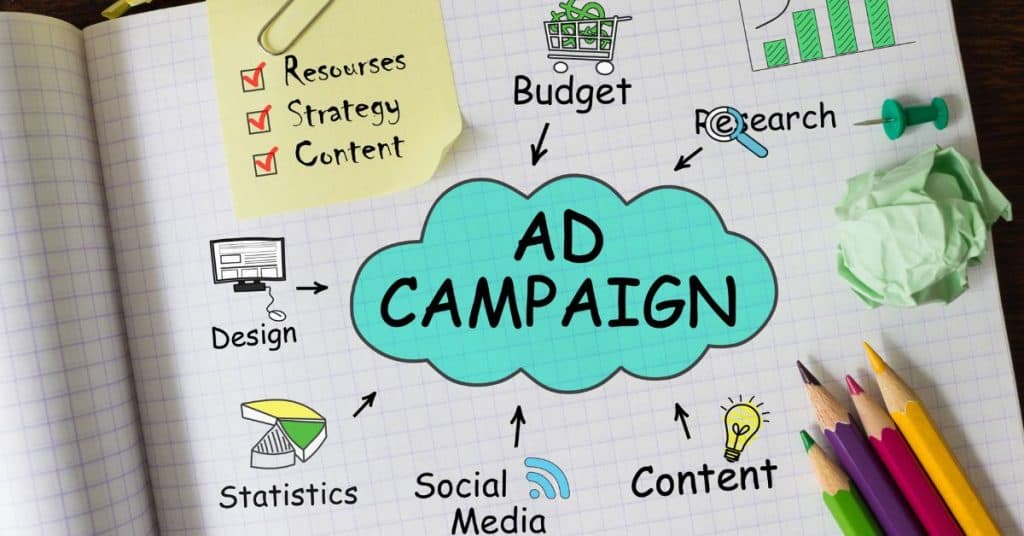
You may wonder what the ideal method is for executing a Digital Advertising campaign now that you know the fundamentals and consider using Digital Advertising to your benefit. You should start developing a digital advertising plan before doing anything else. What does it signify, though? You could be asking. First and foremost, you’ll need to be clear about your objectives for your advertising campaign, including whether you want to raise awareness, drive visitors to your website, or sell goods. Everything else would be worthwhile if you had a goal, and you would simply be wasting your money. Your target audience’s interests, online behavior (e.g., do they browse news feeds idly or actively seek something), and use patterns should all be considered.
Please take a look at which advertising channel will be most effective for reaching your target audience and helping you achieve your objective after you have defined your aim and your target audience. For instance, you may use social media and display advertising to build brand recognition. On the other hand, you will employ Search advertising if you want to offer your items to people while they are looking for them.
The next step after selecting an advertising channel would be to define and organize your ad message. What UVPs or message triggers would be most effective? Which CTA should you employ? Should the message change depend on whether the user wants a solution or simply some information? A digital advertising strategy comprises all these choices about what, how, to whom, etc. Nevertheless, as you can see from this brief introduction, many factors must be considered to develop the ideal digital advertising approach.
So what do you think? Have we cleared up your misconceptions about digital advertising? This article only shows a tiny sample of what Digital Advertising offers; contact us today to learn more or keep learning about Digital Marketing Trends in 2023.
